High monocytes in blood tests: what the value means in the white blood cell differential
Written by
Redazione Qura
Medically reviewed by
Dott.ssa Gabba · Internal medicine
Category
Wellbeing
The Qura editorial team curates and fact-checks health content together with the doctors in the Qura network, with the goal of making test results understandable and useful.
Monocytes are the largest type of white blood cell. High monocytes (monocytosis) means their number exceeds the reference range: it often reflects a recovery phase from an infection or inflammation, but it is a non-specific finding, to be read together with the other white blood cells, the clinical picture and the trend over time.
On this page
Monocytes are the largest type of white blood cell and are part of the white blood cell differential. High monocytes (monocytosis) means their number exceeds the laboratory’s reference range: it often reflects a recovery phase from an infection or inflammation, but it is a non-specific finding, to be read together with the other white blood cells and the clinical picture.

What monocytes are and what they do
Monocytes are the largest type of white blood cell (leukocyte). They are produced in the bone marrow, remain in circulation in the blood for a few hours or a few days, then migrate into the tissues where they mature into macrophages. Their main task is phagocytosis: they engulf and "digest" microorganisms, dead cells and debris, and for this reason they are called the "scavengers" of the immune system.
In the white blood cell differential, monocytes are one of the five types of white blood cell, together with neutrophils, lymphocytes, eosinophils and basophils. In addition to defending the body, they help regulate inflammation and tissue repair, and act as a bridge between innate immunity and the more specific one.

High monocytes: what it means in the white blood cell differential
"High monocytes" (monocytosis) indicates that the number of monocytes exceeds the laboratory’s reference range. It is a non-specific finding: it signals that a share of these cells has increased, not why. This is why it should always be read within the complete white blood cell differential, comparing it with the other white blood cells.
The difference between percentage and absolute value matters. The percentage says how many monocytes there are relative to the total white blood cells: it can turn out "high" only because another population (for example neutrophils) has decreased, without the monocytes having actually increased. The absolute value, that is the number of monocytes per microliter of blood, is the figure that guides most.
Monocyte reference values: why they vary
The reference values of monocytes are not a disease threshold: they are a statistical convention built on healthy people. They change by laboratory, analysis method, age and sex, and in children they vary rapidly with age. This is why the only range that matters for you is the one printed on your report, next to the result.
| How it is expressed | Indicative value (adults) | Note |
|---|---|---|
| Percentage of total white blood cells | about 1-10% (on many reports 2-8%) | very variable by laboratory and method |
| Absolute value | about 200-600 monocytes per microliter (0.2-0.6 x10^9/L) | more stable and reliable figure than the percentage |
In adults, as an indicative reference, the MSD Manual places monocytes at around 1-10% of white blood cells and 200-600 cells per microliter. The threshold above which we speak of monocytosis varies according to the source and the laboratory: a value slightly above the limit does not carry the same weight as a marked and repeated increase.
What can make monocytes rise
The causes of high monocytes are numerous and of different nature, and no high value on its own identifies a precise cause. Among the most frequent situations:
- the recovery phase after an acute infection, when the body is completing the immune response;
- chronic infections, such as tuberculosis;
- chronic inflammatory and autoimmune diseases, for example inflammatory bowel diseases (Crohn’s, ulcerative colitis), rheumatoid arthritis or lupus;
- removal of the spleen (splenectomy), which can leave a moderate and persistent increase;
- physiological factors such as major stress or intense physical exercise.
More rarely, a persistent and marked monocytosis can be linked to blood diseases: it is precisely to rule out or confirm these hypotheses that the full picture is needed, not the single number. An isolated value, on its own, allows no conclusion.
Slightly high monocytes: when to worry and when not to
A slightly high monocyte value, isolated and without symptoms, in most cases has no clinically relevant meaning. Modern laboratories detect even minimal variations, and small deviations often return to normal on their own within a few weeks.
It is instead worth taking the value to the doctor when the increase is marked, when it persists across several tests over time, when it is accompanied by symptoms (prolonged fever, significant fatigue, weight loss) or when several values of the white blood cell differential are altered together. In any case the report should be interpreted by someone who knows your clinical history, not used to self-diagnose.
Which other tests monocytes are read with
The added value lies in reading monocytes together with the rest. The first comparison is with the complete white blood cell differential: neutrophils, lymphocytes, eosinophils, basophils and total white blood cell count. Understanding which populations move together guides much more than the single monocyte.
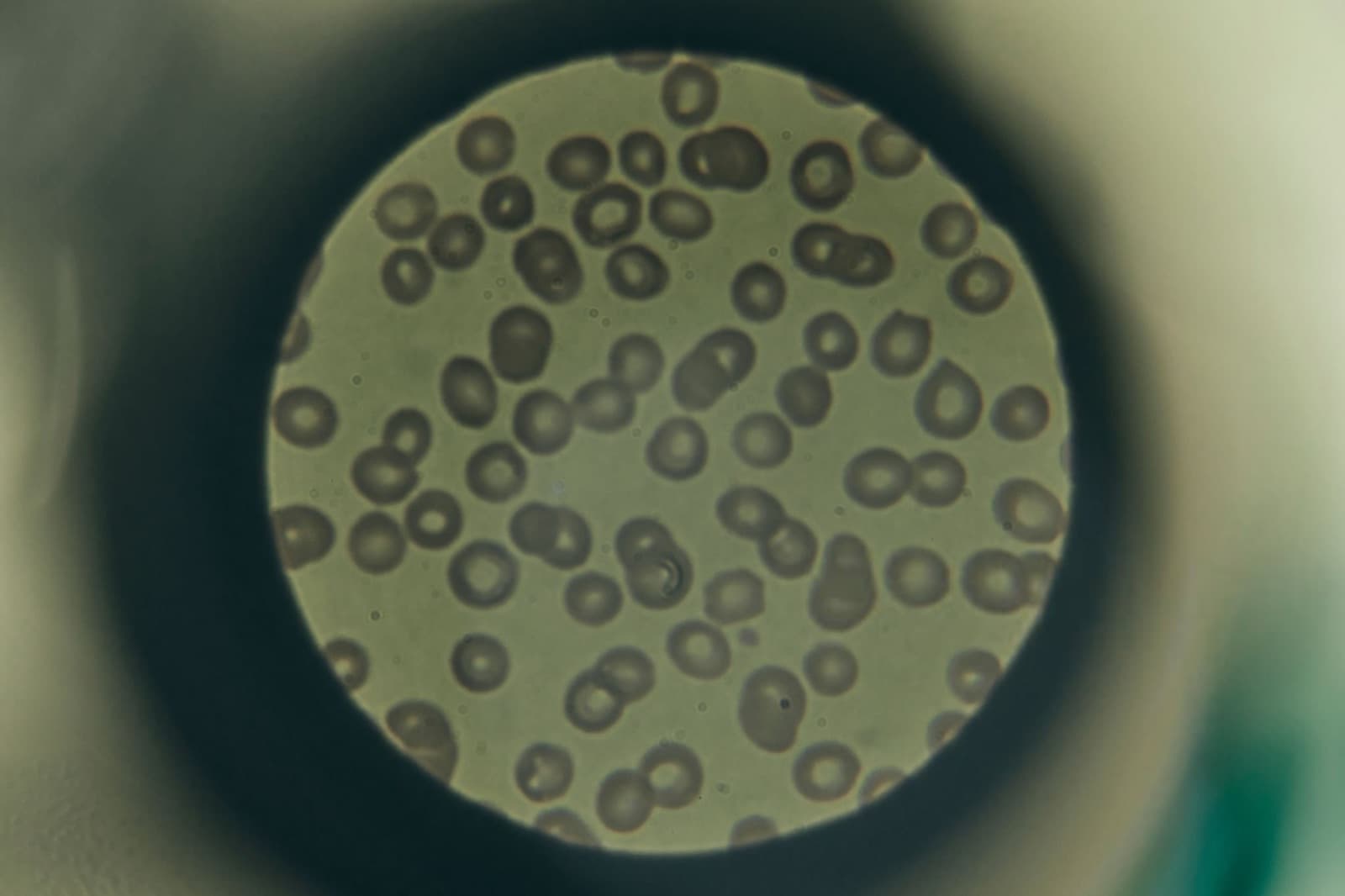
Depending on the suspicion, the doctor may add inflammation markers (CRP, ESR), assess the peripheral blood smear under the microscope to observe cell morphology and, above all, compare the value with previous tests. The trend over time, more than the isolated value, distinguishes a passing variation from a change that deserves attention. If you want to understand how a report is read as a whole, start from the guide on how to read blood test results.
Sources
Frequently asked questions
Do high monocytes always indicate an infection?
No. Monocytes can rise during the recovery phase from an infection, but also with chronic inflammation, stress, intense exercise or simple individual variability; in some cases they stay normal even during an infection. They are a non-specific marker and must be read within the overall picture.
What are the normal values of monocytes?
As an indicative reference, in adults monocytes represent about 1-10% of white blood cells and 200-600 cells per microliter (MSD Manual). The ranges, however, change by laboratory, method, age and sex: the value valid for you is the one reported on your report.
Slightly high monocytes: are they dangerous?
Usually not. A mild, isolated increase, without symptoms and with the rest of the white blood cell differential normal, rarely indicates a problem. It becomes more relevant if it persists over time, is marked or is accompanied by other altered values: in that case it should be assessed by the doctor.
What is the difference between monocytes as a percentage and absolute value?
The percentage indicates the share of monocytes out of the total white blood cells; the absolute value indicates how many monocytes there are per microliter of blood. The percentage can rise only because another population has fallen: this is why the absolute value is generally more informative.
Tags
- high monocytes
- white blood cell differential
- white blood cells