Insulin curve test: how it works and how to read the results
Written by
Redazione Qura
Medically reviewed by
Dott.ssa Margherita Gabba · Internal medicine
Category
Wellbeing
The Qura editorial team curates and fact-checks health content together with the doctors in the Qura network, with the goal of making test results understandable and useful.
The insulin curve test measures how insulin in the blood changes over the two hours after drinking a solution containing 75 grams of glucose. It is usually done together with the glucose curve, with five blood draws over about two hours, and it shows how much insulin the pancreas has to produce to keep blood sugar under control. If your doctor has prescribed it, they probably want to find out whether there is insulin resistance that fasting tests do not fully reveal.
On this page
The insulin curve test measures how insulin in the blood changes over the two hours after drinking a solution containing 75 grams of glucose. It is usually done together with the glucose curve, with five blood draws over about two hours, and it shows how much insulin the pancreas has to produce to keep blood sugar under control. If your doctor has prescribed it, they probably want to find out whether there is insulin resistance that fasting tests do not fully reveal.
What it is for
Fasting blood sugar and insulin tell you how your metabolism is doing at rest. The curve shows what happens under load, that is, when a known amount of sugar arrives, and that is where imbalances that stay hidden while fasting sometimes come to light.
The doctor may request it when they suspect insulin resistance, for example in the presence of abdominal fat, high triglycerides, polycystic ovary syndrome or a family history of diabetes. Sometimes it is also used to understand episodes of hypoglycaemia that appear a few hours after meals.
How to prepare
Instructions can vary from one laboratory to another, so follow the ones yours gives you, but the pattern is similar. Those of the Istituto Europeo di Oncologia (European Institute of Oncology), for example, ask for:
- in the three days before, your usual diet with at least 150 grams of carbohydrates a day, without restrictive diets;
- your usual physical activity, without changing your habits;
- at least 8 hours of fasting, with the test in the morning, preferably by 9 am;
- continuing your usual medicines, unless the doctor advises otherwise for diabetes medicines.
Cutting carbohydrates in the days before the test, thinking it will give a better result, distorts the curve: the body adapts and the response to glucose becomes less representative.
How the test works
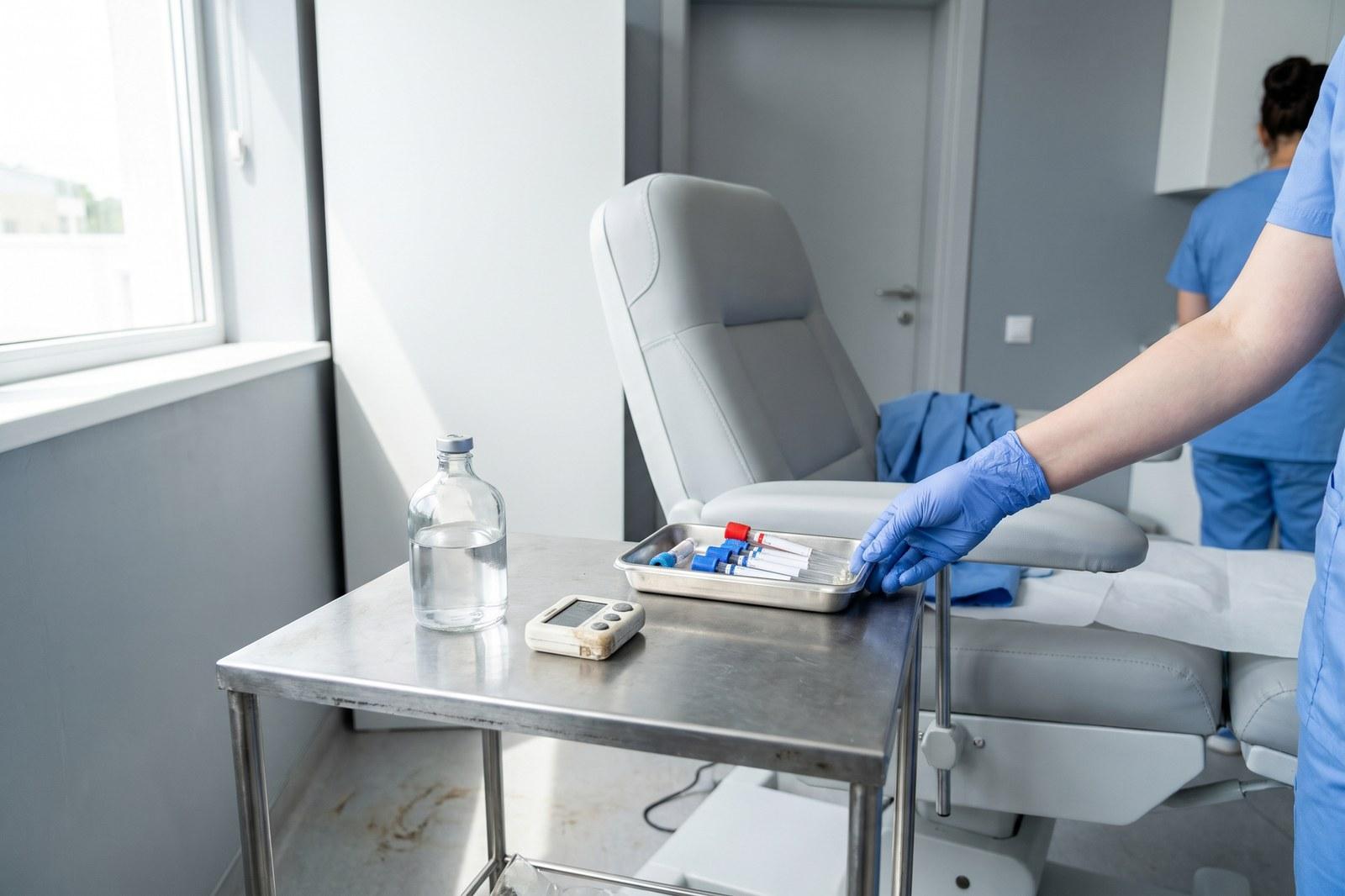
It starts with a fasting blood draw. Before going ahead, the laboratory checks your blood sugar: if it is already high, the test is not carried out. Then you drink the solution with 75 grams of glucose within a few minutes.
Under the Istituto Europeo di Oncologia protocol, the insulin curve involves blood draws at 30, 60, 90 and 120 minutes after the solution, five in all including the first one. Throughout the test you stay seated, without eating, smoking or walking for long, because movement also changes how the muscles use glucose. If you vomit, the test has to be repeated on another day.
How to read the blood sugar values
For blood sugar there are shared thresholds. According to the American Diabetes Association criteria, a two-hour blood sugar between 140 and 199 mg/dL indicates impaired glucose tolerance, one of the forms of prediabetes, and 200 mg/dL or above meets the criteria for diabetes, to be confirmed (American Diabetes Association, 2025).
The first draw, taken while fasting, is read like an ordinary blood sugar test: the reference is below 100 mg/dL, and between 100 and 125 mg/dL is called impaired fasting glucose (American Diabetes Association, 2025).
How to read the insulin values
For insulin there are no equally shared thresholds, and this is the point to know before looking at the report. Each laboratory uses different methods and reports its own reference ranges, and the guidelines for diagnosing diabetes and prediabetes are based on blood sugar.
More than the single number on your report, the doctor looks at the shape of the curve. In a typical response, insulin rises during the first hour and returns towards baseline within two hours. If the peak is very high, comes late, or insulin stays high at two hours while blood sugar has already fallen, the pancreas is working harder than expected to keep the balance.
In the 1970s Joseph Kraft described several patterns of the insulin curve in thousands of people, observing that many had high insulin with blood sugar still within the reference range (Kraft, 1975). His patterns help explain the reasoning, but they have not entered the official diagnostic criteria: this is why reading the curve remains a clinical assessment, made by the doctor together with the other tests.
The HOMA index
The HOMA index estimates insulin resistance from two fasting values: you multiply blood sugar, in mg/dL, by insulin, in µU/mL, and divide the result by 405. Many reports already show it calculated.
For HOMA, too, there is no single threshold. In a study of the Spanish adult population, the values that best distinguished people with metabolic syndrome ranged from about 1.9 to about 3.5, depending on sex, age and the criterion chosen (Gayoso-Diz et al., 2013). This is why many laboratories give their own range, and your doctor reads the number together with the curve and the other tests.
High curve: what you can do
A curve with too much insulin is an early signal, and it comes at a stage when there is room to act. Diet, regular physical activity, weight and sleep are the factors that improve insulin sensitivity. In the Diabetes Prevention Program, weight loss of about 7% with 150 minutes of activity a week reduced the risk of developing diabetes by 58% over about three years (Knowler et al., 2002).
Repeating the tests after a few months shows whether you are on the right track. You do not always need to redo the curve: fasting blood sugar and insulin, with the HOMA index calculation, are often enough.
Fasting insulin is rarely part of routine blood tests, even though it is one of the earliest indicators of metabolic changes. This is why it is always included in the qura check-up, and during the consultation your doctor interprets it with you and assesses whether a curve test is needed to look further.
Sources
- American Diabetes Association Professional Practice Committee. Diagnosis and classification of diabetes: Standards of Care in Diabetes 2025. Diabetes Care. 2025;48(Suppl 1):S27-S49. doi:10.2337/dc25-S002
- Gayoso-Diz P, Otero-González A, Rodríguez-Álvarez MX, et al. Insulin resistance (HOMA-IR) cut-off values and the metabolic syndrome in a general adult population: effect of gender and age: EPIRCE cross-sectional study. BMC Endocr Disord. 2013;13:47. doi:10.1186/1472-6823-13-47
- Istituto Europeo di Oncologia. Modalità di preparazione per curva glicemica e insulinemica. ieo.it
- Knowler WC, Barrett-Connor E, Fowler SE, et al. Reduction in the incidence of type 2 diabetes with lifestyle intervention or metformin. N Engl J Med. 2002;346(6):393-403. doi:10.1056/NEJMoa012512
- Kraft JR. Detection of diabetes mellitus in situ (occult diabetes). Lab Med. 1975;6(2):10-22. doi:10.1093/labmed/6.2.10
Frequently asked questions
Is the insulin curve test painful?
The draws are ordinary venous blood draws. Many laboratories use a small needle left in the vein for the whole test, so you do not need a new prick each time.
Can it be done during pregnancy?
During pregnancy the glucose curve is usually done instead, with a dedicated protocol for gestational diabetes screening. The insulin curve is assessed case by case with the doctor.
How long does the test take?
About two and a half hours, including the initial wait. It’s worth bringing something to read and keeping the morning free.
What are normal insulin values on the curve?
Each laboratory reports its own ranges, because measurement methods vary. The doctor looks mainly at the shape of the curve: how high insulin rises and how long it takes to return towards baseline.
Tags
- insulin curve test
- insulin resistance
- oral glucose tolerance test